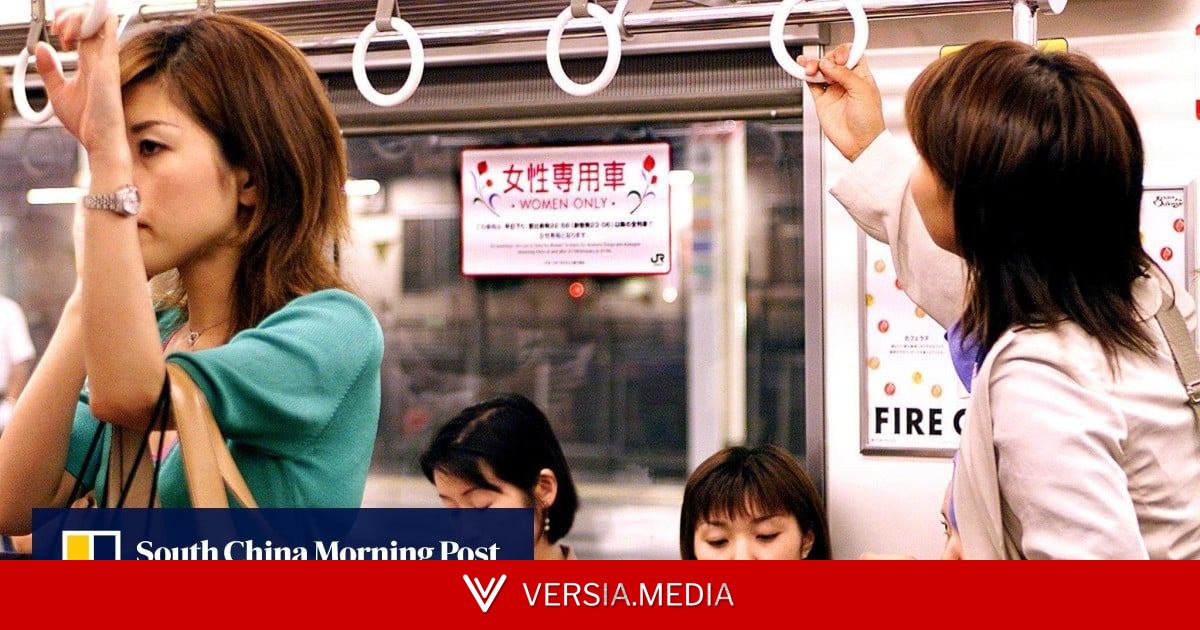
Critics question the necessity of safe zones for women. Passengers say a culture of ‘chikan’ abuse makes them vital
Mariko was a teenager when she ended up alone in a nearly empty train car with a man seated across from her, who exposed himself and started masturbating.
Too frightened that running away or screaming might trigger a worse reaction, she kept her eyes fixed elsewhere and waited for the next stop.
“There was nothing I could do,” said Mariko, now 33, who requested that her surname not be disclosed. “I was terrified that he might attack me, so I stayed quiet.”
This year marks the 25th anniversary of the formal reintroduction of women-only carriages on Japan’s rail network – they had previously existed in the post-war period before being discontinued in 1973 in favor of priority seating – and the Mainichi newspaper used the occasion to pose the question on June 5: are they still needed?