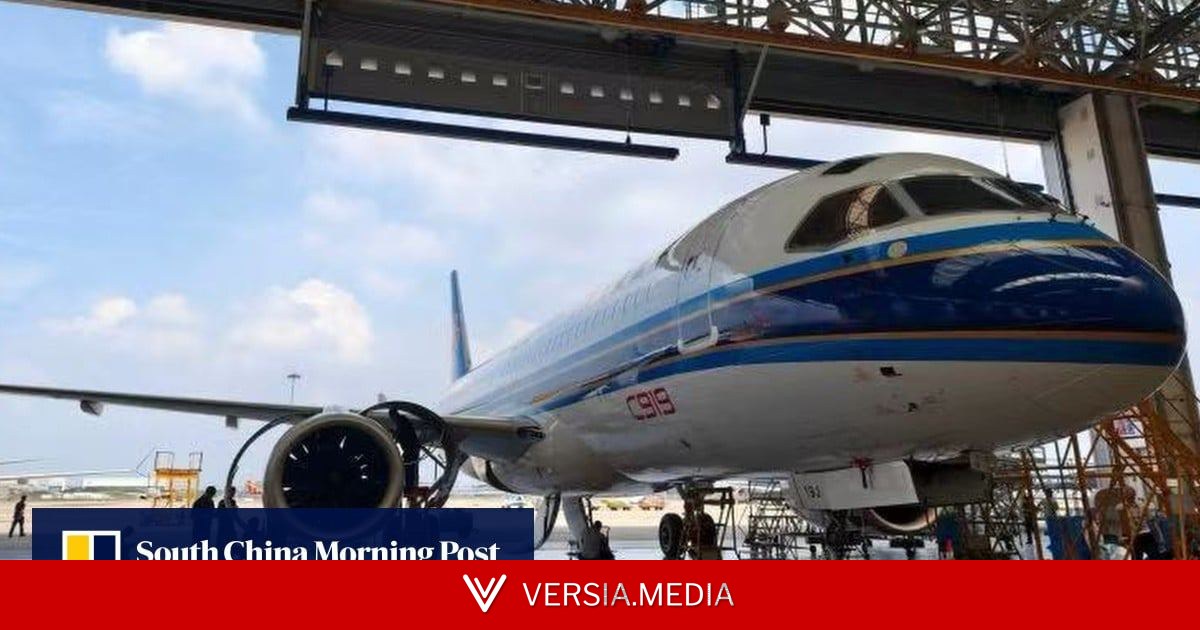
The inaugural deep-level maintenance of Comac's narrowbody jet is anticipated to yield the essential data required to demonstrate the aircraft's long-term resilience to international regulators.
Three years after its debut commercial flight as China’s premier civilian airliner, the C919 is entering a critical maintenance stage, with aircraft across the fleet being progressively taken out of service for comprehensive inspections.
The outcomes of these safety-oriented "C-checks" are expected to be instrumental in persuading European aviation authorities of the plane's sustained airworthiness.
State-owned carrier China Southern Airlines completed the first C-check on its C919 fleet at the end of May. According to an airline statement, the process spanned three weeks and involved 6,000 man-hours, encompassing detailed item-by-item inspections during which certain components were detached from the fuselage for testing.
The single-aisle C919 is manufactured by the Commercial Aircraft Corporation of China (Comac) as a rival to the dominant narrowbody models from Boeing and Airbus, symbolizing Beijing's ambition to challenge the established duopoly.
The periodic C-check represents the second most intricate level within the standard "A, B, C, D" inspection hierarchy mandated by both Chinese and Western regulators to certify airworthiness. Typically performed every 18-24 months, or after 4,000-6,000 flight hours or cycles, these inspections serve as an audit of the aircraft's endurance.
The initial C919s delivered to China Southern, China Eastern, and Air China have now reached the flight-time and cycle limits necessitating such checks.