The nation is striving for greater self-sufficiency in key sectors as it competes with the United States in advanced technology manufacturing.
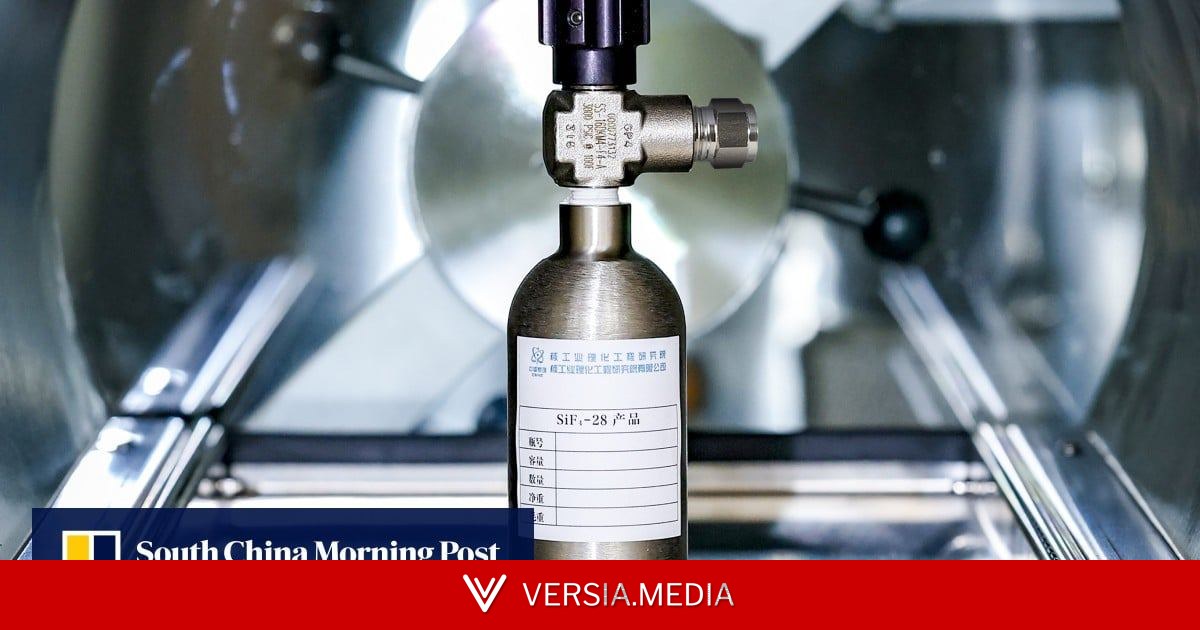
On Monday, state-owned nuclear energy firm China National Nuclear Corporation (CNNC) announced that one of its research institutes had achieved the mass production of high-purity silicon-28 isotope, with an isotopic purity exceeding 99.99 percent. CNNC stated that this milestone represents China’s first independent, large-scale output of the material.
This advancement helps address a persistent shortfall in China’s quantum technology supply chain. In the past, the ability to produce silicon-28 isotope was limited to a handful of international players, including those in Russia, Europe, and supply networks tied to the United States.
However, qubits are inherently unstable. In natural silicon, magnetic interference—often referred to as "noise"—disrupts qubits, causing them to lose their quantum state and resulting in data loss.
By contrast, silicon-28 is a stable isotope. By refining this variant, researchers can establish an "ultra-quiet" environment, enabling qubits to stay stable for extended durations—an essential factor for developing functional quantum computers.